
Post:
The UX Mistakes Quietly Killing Shopify Sales
A lot of Shopify stores look good.
They have polished branding, strong photography, clean typography, smooth animations, and expensive themes. On the surface, everything appears “done”.
But many of these stores still struggle with conversion, retention, average order value, and customer trust.
Why?
Because visual design and user experience are not the same thing.
A beautiful Shopify store can still create friction at every stage of the customer journey.
What Actually Hurts Conversion
Most ecommerce brands focus heavily on aesthetics:
Better banners
New fonts
Trendier layouts
More animations
More content
More apps
But customers rarely leave because your button radius is wrong.
They leave because:
They cannot quickly understand your product
Navigation feels confusing
Product pages overwhelm them
The buying journey feels slow
Important information is hidden
Mobile interactions feel awkward
Trust is not established fast enough
This is where UX design becomes critical.
Good UX removes hesitation.
Great UX creates momentum.
The Difference Between “Looks Nice” and “Works Well”
One of the biggest issues in ecommerce is confusing UI design with UX strategy.
UI design is what users see.
UX design is how users think, move, decide, and convert.
A Shopify store should guide users naturally through:
Discovery
Validation
Trust
Decision
Checkout
When any of these stages feel unclear, conversion drops.
That means UX work is often less about adding things and more about simplifying what already exists.
Common Shopify UX Problems I See
After reviewing and designing Shopify experiences across fashion, lifestyle, SaaS-integrated ecommerce, and DTC brands, the same issues appear repeatedly.
1. Overdesigned Homepages
Many homepages try to say everything at once.
Too many banners.
Too many moving elements.
Too many competing messages.
Users should understand:
What you sell
Why it matters
Why they should trust you
…within seconds.
Clarity almost always outperforms complexity.
2. Weak Product Pages
The product page is where most conversion decisions happen.
Yet many stores:
Push key information too far down
Hide delivery/returns details
Overload users with tabs
Use unclear variant selectors
Ignore mobile-first interactions
Strong product page UX focuses on confidence and decision-making.
3. Mobile Experience Is Treated Like a Smaller Desktop
Most ecommerce traffic is mobile.
Yet many Shopify experiences are still designed desktop-first.
Buttons become cramped.
Navigation becomes layered.
Sticky elements fight for space.
Content becomes difficult to scan.
Good mobile UX is not compression.
It is prioritisation.
4. Too Many Apps
Apps solve problems.
But they also introduce:
Slower performance
Inconsistent UI
Visual clutter
Competing interactions
The best Shopify stores often feel simpler because they are more intentional.
UX Is Also a Business Tool
This is the part many brands overlook.
UX is not only about aesthetics or usability.
It directly impacts:
Conversion rate
Average order value
Retention
Customer satisfaction
Support requests
Brand perception
A better user experience often means fewer abandoned carts, fewer confused customers, and stronger long-term growth.
The Best Ecommerce Experiences Feel Effortless
When UX is done properly, users barely notice it.
The journey simply feels natural.
Products are easier to discover.
Information feels clearer.
Purchasing feels faster.
Trust feels stronger.
That is the difference between a store that looks modern and a store that performs.
Final Thought
Shopify gives brands incredible flexibility.
But flexibility can also create noise.
The stores that stand out are rarely the ones doing the most.
They are usually the ones creating the clearest, fastest, and most intuitive experience for their customers.
Good UX design is not decoration.
It is strategy.
And in ecommerce, strategy converts.
Next Post


UX Design & Reserach
Crafting User-Focused Digital Experiences For Advanced Customer Engagement.
UX Design Consultant & Strategist Advisor @ Self-Employed (Me&Co) | UI Designer, UX Product Researcher, Brand Designer, Social Media Manager.As a Consultant, Mentor, Researcher, UX/UI Designer, and Developer, I am passionate about crafting intuitive and user-centric digital experiences. With a strong foundation in UX strategy, UI design, and development, I bridge the gap between research, design, and technology to create innovative and scalable solutions. My expertise extends across multiple industries, delivering impactful products through a mix of design thinking, user research, and technical execution.
With years of experience, I have successfully led and contributed to numerous projects, enhancing user engagement and optimizing business performance. My ability to integrate UX principles with cutting-edge technology ensures that I develop solutions that are not only aesthetically pleasing but also highly functional and user-friendly.
Let’s make your product easier to use
Contact me, on the following links.


START WITH THE PROBLEM
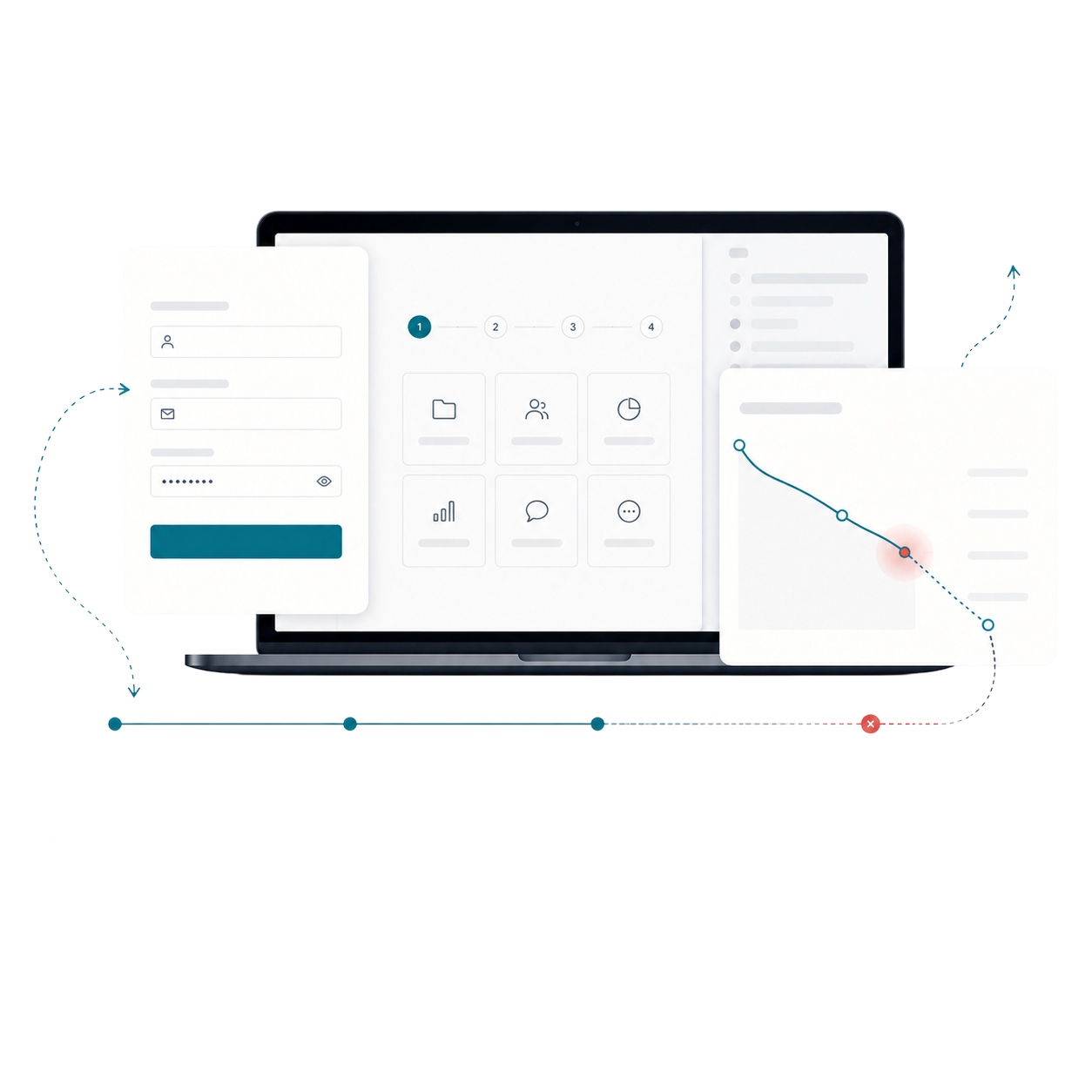
Have a product, store or digital experience that needs clearer thinking?
I help SaaS founders, Shopify brands and agencies diagnose friction, design better journeys and deliver interfaces that can actually be built.


UX · PRODUCT · SHOPIFY · DEVELOPMENT
I solve usability problems before they become business problems — connecting UX, product thinking and build-ready delivery.

Available for selected remote projects


© 2026 Steve Roberts / ME&CO. All rights reserved.



MENU

Post:
The UX Mistakes Quietly Killing Shopify Sales
A lot of Shopify stores look good.
They have polished branding, strong photography, clean typography, smooth animations, and expensive themes. On the surface, everything appears “done”.
But many of these stores still struggle with conversion, retention, average order value, and customer trust.
Why?
Because visual design and user experience are not the same thing.
A beautiful Shopify store can still create friction at every stage of the customer journey.
What Actually Hurts Conversion
Most ecommerce brands focus heavily on aesthetics:
Better banners
New fonts
Trendier layouts
More animations
More content
More apps
But customers rarely leave because your button radius is wrong.
They leave because:
They cannot quickly understand your product
Navigation feels confusing
Product pages overwhelm them
The buying journey feels slow
Important information is hidden
Mobile interactions feel awkward
Trust is not established fast enough
This is where UX design becomes critical.
Good UX removes hesitation.
Great UX creates momentum.
The Difference Between “Looks Nice” and “Works Well”
One of the biggest issues in ecommerce is confusing UI design with UX strategy.
UI design is what users see.
UX design is how users think, move, decide, and convert.
A Shopify store should guide users naturally through:
Discovery
Validation
Trust
Decision
Checkout
When any of these stages feel unclear, conversion drops.
That means UX work is often less about adding things and more about simplifying what already exists.
Common Shopify UX Problems I See
After reviewing and designing Shopify experiences across fashion, lifestyle, SaaS-integrated ecommerce, and DTC brands, the same issues appear repeatedly.
1. Overdesigned Homepages
Many homepages try to say everything at once.
Too many banners.
Too many moving elements.
Too many competing messages.
Users should understand:
What you sell
Why it matters
Why they should trust you
…within seconds.
Clarity almost always outperforms complexity.
2. Weak Product Pages
The product page is where most conversion decisions happen.
Yet many stores:
Push key information too far down
Hide delivery/returns details
Overload users with tabs
Use unclear variant selectors
Ignore mobile-first interactions
Strong product page UX focuses on confidence and decision-making.
3. Mobile Experience Is Treated Like a Smaller Desktop
Most ecommerce traffic is mobile.
Yet many Shopify experiences are still designed desktop-first.
Buttons become cramped.
Navigation becomes layered.
Sticky elements fight for space.
Content becomes difficult to scan.
Good mobile UX is not compression.
It is prioritisation.
4. Too Many Apps
Apps solve problems.
But they also introduce:
Slower performance
Inconsistent UI
Visual clutter
Competing interactions
The best Shopify stores often feel simpler because they are more intentional.
UX Is Also a Business Tool
This is the part many brands overlook.
UX is not only about aesthetics or usability.
It directly impacts:
Conversion rate
Average order value
Retention
Customer satisfaction
Support requests
Brand perception
A better user experience often means fewer abandoned carts, fewer confused customers, and stronger long-term growth.
The Best Ecommerce Experiences Feel Effortless
When UX is done properly, users barely notice it.
The journey simply feels natural.
Products are easier to discover.
Information feels clearer.
Purchasing feels faster.
Trust feels stronger.
That is the difference between a store that looks modern and a store that performs.
Final Thought
Shopify gives brands incredible flexibility.
But flexibility can also create noise.
The stores that stand out are rarely the ones doing the most.
They are usually the ones creating the clearest, fastest, and most intuitive experience for their customers.
Good UX design is not decoration.
It is strategy.
And in ecommerce, strategy converts.
Next Post


UX Design & Reserach
Crafting User-Focused Digital Experiences For Advanced Customer Engagement.
UX Design Consultant & Strategist Advisor @ Self-Employed (Me&Co) | UI Designer, UX Product Researcher, Brand Designer, Social Media Manager.As a Consultant, Mentor, Researcher, UX/UI Designer, and Developer, I am passionate about crafting intuitive and user-centric digital experiences. With a strong foundation in UX strategy, UI design, and development, I bridge the gap between research, design, and technology to create innovative and scalable solutions. My expertise extends across multiple industries, delivering impactful products through a mix of design thinking, user research, and technical execution.
With years of experience, I have successfully led and contributed to numerous projects, enhancing user engagement and optimizing business performance. My ability to integrate UX principles with cutting-edge technology ensures that I develop solutions that are not only aesthetically pleasing but also highly functional and user-friendly.
Let’s make something happen
Send me an Enquiry, Book a Discovery Call
Contact me, on the following links.
Let’s make something happen
Send me an Enquiry, Book a Discovery Call
Contact me, on the following links.
START WITH THE PROBLEM
Have a product, store or digital experience that needs clearer thinking?
I help SaaS founders, Shopify brands and agencies diagnose friction, design better journeys and deliver interfaces that can actually be built.


UX · PRODUCT · SHOPIFY · DEVELOPMENT
I solve usability problems before they become business problems — connecting UX, product thinking and build-ready delivery.
Available for selected remote projects


© 2026 Steve Roberts / ME&CO. All rights reserved.

HOME
MENU


Post:
The UX Mistakes Quietly Killing Shopify Sales
A lot of Shopify stores look good.
They have polished branding, strong photography, clean typography, smooth animations, and expensive themes. On the surface, everything appears “done”.
But many of these stores still struggle with conversion, retention, average order value, and customer trust.
Why?
Because visual design and user experience are not the same thing.
A beautiful Shopify store can still create friction at every stage of the customer journey.
What Actually Hurts Conversion
Most ecommerce brands focus heavily on aesthetics:
Better banners
New fonts
Trendier layouts
More animations
More content
More apps
But customers rarely leave because your button radius is wrong.
They leave because:
They cannot quickly understand your product
Navigation feels confusing
Product pages overwhelm them
The buying journey feels slow
Important information is hidden
Mobile interactions feel awkward
Trust is not established fast enough
This is where UX design becomes critical.
Good UX removes hesitation.
Great UX creates momentum.
The Difference Between “Looks Nice” and “Works Well”
One of the biggest issues in ecommerce is confusing UI design with UX strategy.
UI design is what users see.
UX design is how users think, move, decide, and convert.
A Shopify store should guide users naturally through:
Discovery
Validation
Trust
Decision
Checkout
When any of these stages feel unclear, conversion drops.
That means UX work is often less about adding things and more about simplifying what already exists.
Common Shopify UX Problems I See
After reviewing and designing Shopify experiences across fashion, lifestyle, SaaS-integrated ecommerce, and DTC brands, the same issues appear repeatedly.
1. Overdesigned Homepages
Many homepages try to say everything at once.
Too many banners.
Too many moving elements.
Too many competing messages.
Users should understand:
What you sell
Why it matters
Why they should trust you
…within seconds.
Clarity almost always outperforms complexity.
2. Weak Product Pages
The product page is where most conversion decisions happen.
Yet many stores:
Push key information too far down
Hide delivery/returns details
Overload users with tabs
Use unclear variant selectors
Ignore mobile-first interactions
Strong product page UX focuses on confidence and decision-making.
3. Mobile Experience Is Treated Like a Smaller Desktop
Most ecommerce traffic is mobile.
Yet many Shopify experiences are still designed desktop-first.
Buttons become cramped.
Navigation becomes layered.
Sticky elements fight for space.
Content becomes difficult to scan.
Good mobile UX is not compression.
It is prioritisation.
4. Too Many Apps
Apps solve problems.
But they also introduce:
Slower performance
Inconsistent UI
Visual clutter
Competing interactions
The best Shopify stores often feel simpler because they are more intentional.
UX Is Also a Business Tool
This is the part many brands overlook.
UX is not only about aesthetics or usability.
It directly impacts:
Conversion rate
Average order value
Retention
Customer satisfaction
Support requests
Brand perception
A better user experience often means fewer abandoned carts, fewer confused customers, and stronger long-term growth.
The Best Ecommerce Experiences Feel Effortless
When UX is done properly, users barely notice it.
The journey simply feels natural.
Products are easier to discover.
Information feels clearer.
Purchasing feels faster.
Trust feels stronger.
That is the difference between a store that looks modern and a store that performs.
Final Thought
Shopify gives brands incredible flexibility.
But flexibility can also create noise.
The stores that stand out are rarely the ones doing the most.
They are usually the ones creating the clearest, fastest, and most intuitive experience for their customers.
Good UX design is not decoration.
It is strategy.
And in ecommerce, strategy converts.
Next Post


UX Design & Research
Crafting User-Focused Digital Experiences For Advanced Customer Engagement.
UX Design Consultant & Strategist Advisor @ Self-Employed (Me&Co) | UI Designer, UX Product Researcher, Brand Designer, Social Media Manager.As a Consultant, Mentor, Researcher, UX/UI Designer, and Developer, I am passionate about crafting intuitive and user-centric digital experiences. With a strong foundation in UX strategy, UI design, and development, I bridge the gap between research, design, and technology to create innovative and scalable solutions. My expertise extends across multiple industries, delivering impactful products through a mix of design thinking, user research, and technical execution.
Agile and human centred design










START WITH THE PROBLEM
Have a product, store or digital experience that needs clearer thinking?
I help SaaS founders, Shopify brands and agencies diagnose friction, design better journeys and deliver interfaces that can actually be built.


UX · PRODUCT · SHOPIFY · DEVELOPMENT
I solve usability problems before they become business problems — connecting UX, product thinking and build-ready delivery.
Available for selected remote projects

© 2026 Steve Roberts / ME&CO. All rights reserved.

ABOUT
UX CONSULTANT
UX RESEARCH
UI & GRAPHICS
SOFTWARE
PORTFOLIO
RESOURCES
BOOKS
BLOG
