
UX Research Without Ego: Letting Go of Assumptions
Wed 28th January 2026
One of the hardest parts of UX research isn’t choosing the right method or running the sessions.
It’s letting go of what you think you already know.
As designers and developers, we’re paid for our expertise. Over time, that experience builds intuition — and intuition is valuable. But it can also quietly turn into assumption. And assumptions are where good products start to drift away from real people.
The hidden problem with “experience”
Experience can trick us into skipping steps.
We’ve seen similar products before.
We’ve solved comparable problems.
We’ve worked with this type of user, this industry, this platform.
So we assume.
We assume what users want.
We assume where friction exists.
We assume what “simple” means.
The danger isn’t arrogance — it’s familiarity. Familiarity shortens our curiosity.
Research isn’t about being right
Good UX research isn’t about confirming your thinking. It’s about challenging it.
The moment research becomes a tool to validate decisions that are already made, it stops being research. It becomes justification.
Real insight often feels uncomfortable:
- Users don’t behave how you expected
- They misunderstand things you thought were obvious
- They value something you almost removed
That discomfort is a signal — not a failure.
Letting go of ego doesn’t mean letting go of expertise
Ego in UX isn’t loud or obvious. It’s subtle.
It shows up as:
- Leading questions
- Ignoring outlier feedback
- Explaining user behaviour instead of listening to it
- Designing solutions before understanding the problem
Letting go of ego doesn’t mean you abandon your skills. It means you allow your skills to respond to reality rather than control it.
Experience should guide how you explore — not what you conclude.
Designing with curiosity, not certainty
The most effective research mindset is curiosity.
Curiosity sounds like:
- “Help me understand…”
- “Why did you choose that?”
- “What were you expecting to happen?”
It avoids:
- “Wouldn’t it be better if…”
- “Most people usually…”
- “That’s probably because…”
When you approach research with curiosity, users feel it. They open up. They stop trying to give the “right” answer.
And that’s where real insight lives.
Insight only matters if it changes something
Research isn’t complete when findings are documented.
It’s complete when:
- assumptions are revised
- designs are adjusted
- decisions are questioned
- trade-offs are made consciously
If nothing changes after research, the problem wasn’t the users — it was the mindset.
Final thought
The best UX work happens when we’re confident enough to admit we don’t know everything.
When we stop designing for the user we imagine, and start designing for the people in front of us.
Good research doesn’t make you look clever.
It makes the product feel obvious.
And that’s the point.


Highlighted: Malomatia


Key Areas
UX Audit & Heuristic EvaluationStakeholder InterviewsUser Research & Analytics ReviewCompetitor & Market AnalysisInformation Architecture ReviewNavigation & UX Flow Optimisation
Mobile & Responsive UX EvaluationPerformance & Page Load AssessmentAccessibility & Inclusive Design (WCAG)UX Reporting & Prioritised RecommendationsStrategic UX Consultancy
I conducted a comprehensive UX audit of malomatia.com to identify usability, performance, and accessibility issues impacting user engagement.
Through heuristic evaluation, stakeholder input, user research, and competitor benchmarking, I assessed navigation, mobile responsiveness, visual hierarchy, and page performance. The audit produced a set of prioritised, actionable recommendations to improve information architecture, accessibility, and overall user experience, aligning the site more closely with user needs and Malomatia’s business goals.

UI & Graphic Portfolio

START WITH THE PROBLEM
Have a product, store or digital experience that needs clearer thinking?
I help SaaS founders, Shopify brands and agencies diagnose friction, design better journeys and deliver interfaces that can actually be built.


UX · PRODUCT · SHOPIFY · DEVELOPMENT
I solve usability problems before they become business problems — connecting UX, product thinking and build-ready delivery.

Available for selected remote projects


© 2026 Steve Roberts / ME&CO. All rights reserved.



MENU

UX Research Without Ego: Letting Go of Assumptions
Wed 28th January 2026
One of the hardest parts of UX research isn’t choosing the right method or running the sessions.
It’s letting go of what you think you already know.
As designers and developers, we’re paid for our expertise. Over time, that experience builds intuition — and intuition is valuable. But it can also quietly turn into assumption. And assumptions are where good products start to drift away from real people.
The hidden problem with “experience”
Experience can trick us into skipping steps.
We’ve seen similar products before.
We’ve solved comparable problems.
We’ve worked with this type of user, this industry, this platform.
So we assume.
We assume what users want.
We assume where friction exists.
We assume what “simple” means.
The danger isn’t arrogance — it’s familiarity. Familiarity shortens our curiosity.
Research isn’t about being right
Good UX research isn’t about confirming your thinking. It’s about challenging it.
The moment research becomes a tool to validate decisions that are already made, it stops being research. It becomes justification.
Real insight often feels uncomfortable:
- Users don’t behave how you expected
- They misunderstand things you thought were obvious
- They value something you almost removed
That discomfort is a signal — not a failure.
Letting go of ego doesn’t mean letting go of expertise
Ego in UX isn’t loud or obvious. It’s subtle.
It shows up as:
- Leading questions
- Ignoring outlier feedback
- Explaining user behaviour instead of listening to it
- Designing solutions before understanding the problem
Letting go of ego doesn’t mean you abandon your skills. It means you allow your skills to respond to reality rather than control it.
Experience should guide how you explore — not what you conclude.
Designing with curiosity, not certainty
The most effective research mindset is curiosity.
Curiosity sounds like:
- “Help me understand…”
- “Why did you choose that?”
- “What were you expecting to happen?”
It avoids:
- “Wouldn’t it be better if…”
- “Most people usually…”
- “That’s probably because…”
When you approach research with curiosity, users feel it. They open up. They stop trying to give the “right” answer.
And that’s where real insight lives.
Insight only matters if it changes something
Research isn’t complete when findings are documented.
It’s complete when:
- assumptions are revised
- designs are adjusted
- decisions are questioned
- trade-offs are made consciously
If nothing changes after research, the problem wasn’t the users — it was the mindset.
Final thought
The best UX work happens when we’re confident enough to admit we don’t know everything.
When we stop designing for the user we imagine, and start designing for the people in front of us.
Good research doesn’t make you look clever.
It makes the product feel obvious.
And that’s the point.
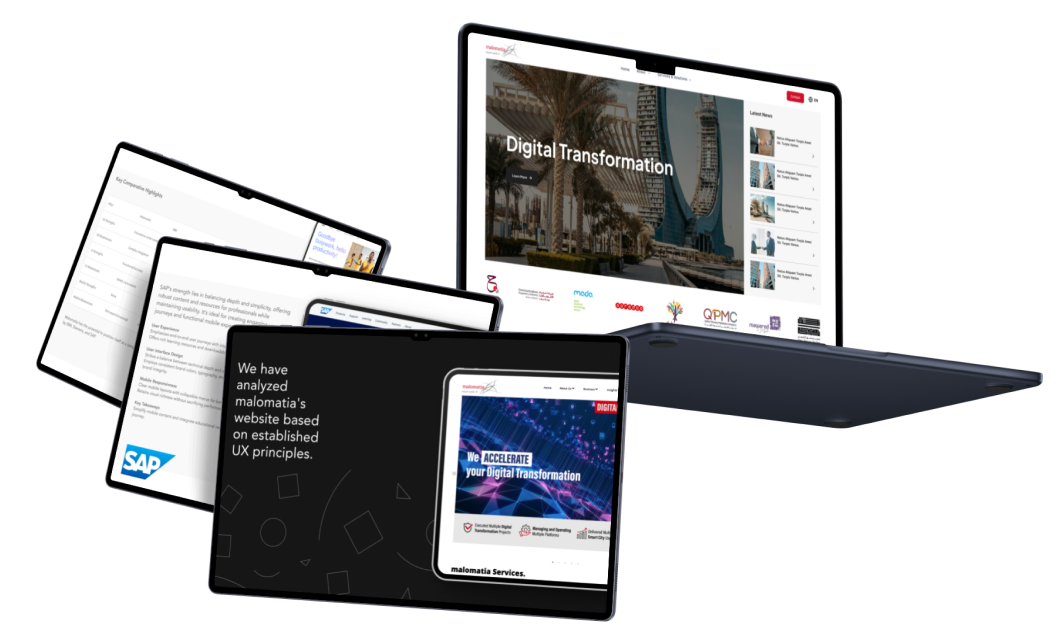
Highlighted: Malomatia
Key Areas
UX Audit & Heuristic EvaluationStakeholder InterviewsUser Research & Analytics ReviewCompetitor & Market AnalysisInformation Architecture ReviewNavigation & UX Flow Optimisation
Mobile & Responsive UX EvaluationPerformance & Page Load AssessmentAccessibility & Inclusive Design (WCAG)UX Reporting & Prioritised RecommendationsStrategic UX Consultancy
I conducted a comprehensive UX audit of malomatia.com to identify usability, performance, and accessibility issues impacting user engagement.
Through heuristic evaluation, stakeholder input, user research, and competitor benchmarking, I assessed navigation, mobile responsiveness, visual hierarchy, and page performance. The audit produced a set of prioritised, actionable recommendations to improve information architecture, accessibility, and overall user experience, aligning the site more closely with user needs and Malomatia’s business goals.
UI & Graphic Portfolio
START WITH THE PROBLEM
Have a product, store or digital experience that needs clearer thinking?
I help SaaS founders, Shopify brands and agencies diagnose friction, design better journeys and deliver interfaces that can actually be built.


UX · PRODUCT · SHOPIFY · DEVELOPMENT
I solve usability problems before they become business problems — connecting UX, product thinking and build-ready delivery.
Available for selected remote projects


© 2026 Steve Roberts / ME&CO. All rights reserved.

HOME
MENU

UX Research Without Ego: Letting Go of Assumptions
Wed 28th January 2026

One of the hardest parts of UX research isn’t choosing the right method or running the sessions.
It’s letting go of what you think you already know.
As designers and developers, we’re paid for our expertise. Over time, that experience builds intuition — and intuition is valuable. But it can also quietly turn into assumption. And assumptions are where good products start to drift away from real people.
The hidden problem with “experience”
Experience can trick us into skipping steps.
We’ve seen similar products before.
We’ve solved comparable problems.
We’ve worked with this type of user, this industry, this platform.
So we assume.
We assume what users want.
We assume where friction exists.
We assume what “simple” means.
The danger isn’t arrogance — it’s familiarity. Familiarity shortens our curiosity.
Research isn’t about being right
Good UX research isn’t about confirming your thinking. It’s about challenging it.
The moment research becomes a tool to validate decisions that are already made, it stops being research. It becomes justification.
Real insight often feels uncomfortable:
- Users don’t behave how you expected
- They misunderstand things you thought were obvious
- They value something you almost removed
That discomfort is a signal — not a failure.
Letting go of ego doesn’t mean letting go of expertise
Ego in UX isn’t loud or obvious. It’s subtle.
It shows up as:
- Leading questions
- Ignoring outlier feedback
- Explaining user behaviour instead of listening to it
- Designing solutions before understanding the problem
Letting go of ego doesn’t mean you abandon your skills. It means you allow your skills to respond to reality rather than control it.
Experience should guide how you explore — not what you conclude.
Designing with curiosity, not certainty
The most effective research mindset is curiosity.
Curiosity sounds like:
- “Help me understand…”
- “Why did you choose that?”
- “What were you expecting to happen?”
It avoids:
- “Wouldn’t it be better if…”
- “Most people usually…”
- “That’s probably because…”
When you approach research with curiosity, users feel it. They open up. They stop trying to give the “right” answer.
And that’s where real insight lives.
Insight only matters if it changes something
Research isn’t complete when findings are documented.
It’s complete when:
- assumptions are revised
- designs are adjusted
- decisions are questioned
- trade-offs are made consciously
If nothing changes after research, the problem wasn’t the users — it was the mindset.
Final thought
The best UX work happens when we’re confident enough to admit we don’t know everything.
When we stop designing for the user we imagine, and start designing for the people in front of us.
Good research doesn’t make you look clever.
It makes the product feel obvious.
And that’s the point.

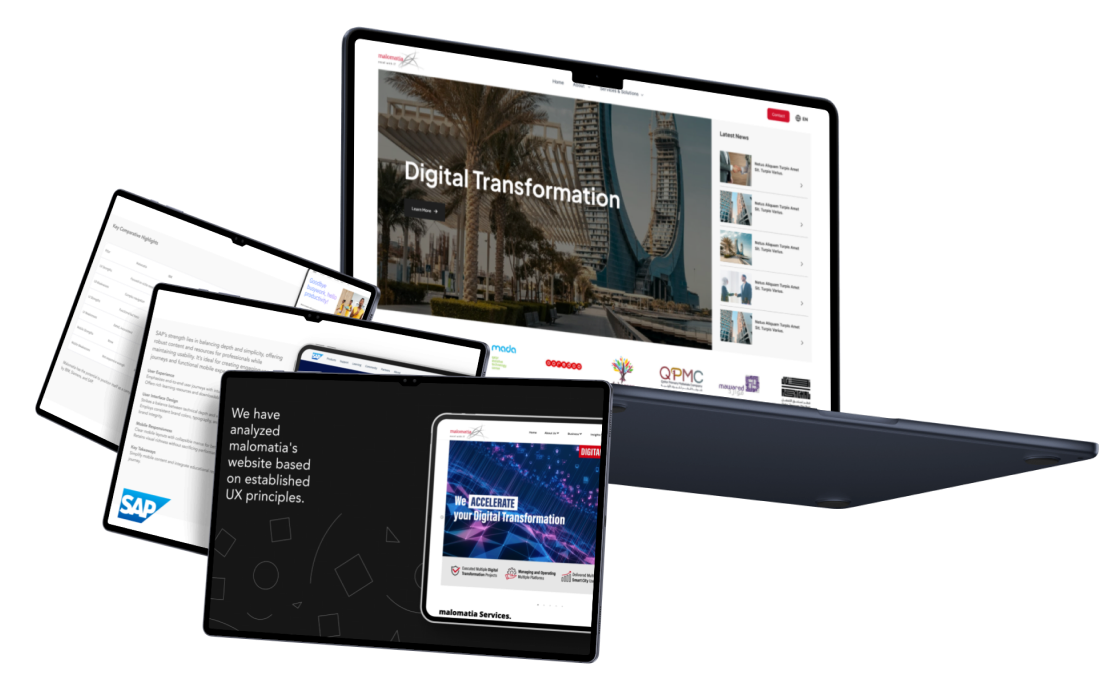
Highlighted: Malomatia
Key Areas
UX Audit & Heuristic EvaluationStakeholder InterviewsUser Research & Analytics ReviewCompetitor & Market AnalysisInformation Architecture ReviewNavigation & UX Flow Optimisation
Mobile & Responsive UX EvaluationPerformance & Page Load AssessmentAccessibility & Inclusive Design (WCAG)UX Reporting & Prioritised RecommendationsStrategic UX Consultancy
I conducted a comprehensive UX audit of malomatia.com to identify usability, performance, and accessibility issues impacting user engagement.
Through heuristic evaluation, stakeholder input, user research, and competitor benchmarking, I assessed navigation, mobile responsiveness, visual hierarchy, and page performance. The audit produced a set of prioritised, actionable recommendations to improve information architecture, accessibility, and overall user experience, aligning the site more closely with user needs and Malomatia’s business goals.
UI & Graphic Portfolio









START WITH THE PROBLEM
Have a product, store or digital experience that needs clearer thinking?
I help SaaS founders, Shopify brands and agencies diagnose friction, design better journeys and deliver interfaces that can actually be built.


UX · PRODUCT · SHOPIFY · DEVELOPMENT
I solve usability problems before they become business problems — connecting UX, product thinking and build-ready delivery.
Available for selected remote projects


© 2026 Steve Roberts / ME&CO. All rights reserved.

ABOUT
UX CONSULTANT
UX RESEARCH
UI & GRAPHICS
SOFTWARE
PORTFOLIO
RESOURCES
BOOKS
BLOG
