

Post:
Why Most UX Redesigns Fail
Many redesign projects begin with excitement and end with disappointment. Not because teams lack skill — but because they lack clarity.
The most common reasons redesigns fail:
1. They focus on appearance, not behaviour
Changing visuals without understanding user decision-making rarely improves outcomes.
2. They skip research
Assumptions replace evidence. Design becomes opinion-driven.
3. They solve internal problems, not user problems
What stakeholders want is not always what users need.
4. They measure success incorrectly
If success is “it looks better,” impact will be unclear.
Effective redesigns start with understanding:
- Where users struggle
- Why they hesitate
- What they expect
- What prevents completion
Redesign is not reinvention. It is optimisation based on evidence.
The best redesign is not the boldest.
It is the most informed.
Next Post


UX Design & Reserach
Crafting User-Focused Digital Experiences For Advanced Customer Engagement.
UX Design Consultant & Strategist Advisor @ Self-Employed (Me&Co) | UI Designer, UX Product Researcher, Brand Designer, Social Media Manager.As a Consultant, Mentor, Researcher, UX/UI Designer, and Developer, I am passionate about crafting intuitive and user-centric digital experiences. With a strong foundation in UX strategy, UI design, and development, I bridge the gap between research, design, and technology to create innovative and scalable solutions. My expertise extends across multiple industries, delivering impactful products through a mix of design thinking, user research, and technical execution.
With years of experience, I have successfully led and contributed to numerous projects, enhancing user engagement and optimizing business performance. My ability to integrate UX principles with cutting-edge technology ensures that I develop solutions that are not only aesthetically pleasing but also highly functional and user-friendly.
Let’s make your product easier to use
Contact me, on the following links.


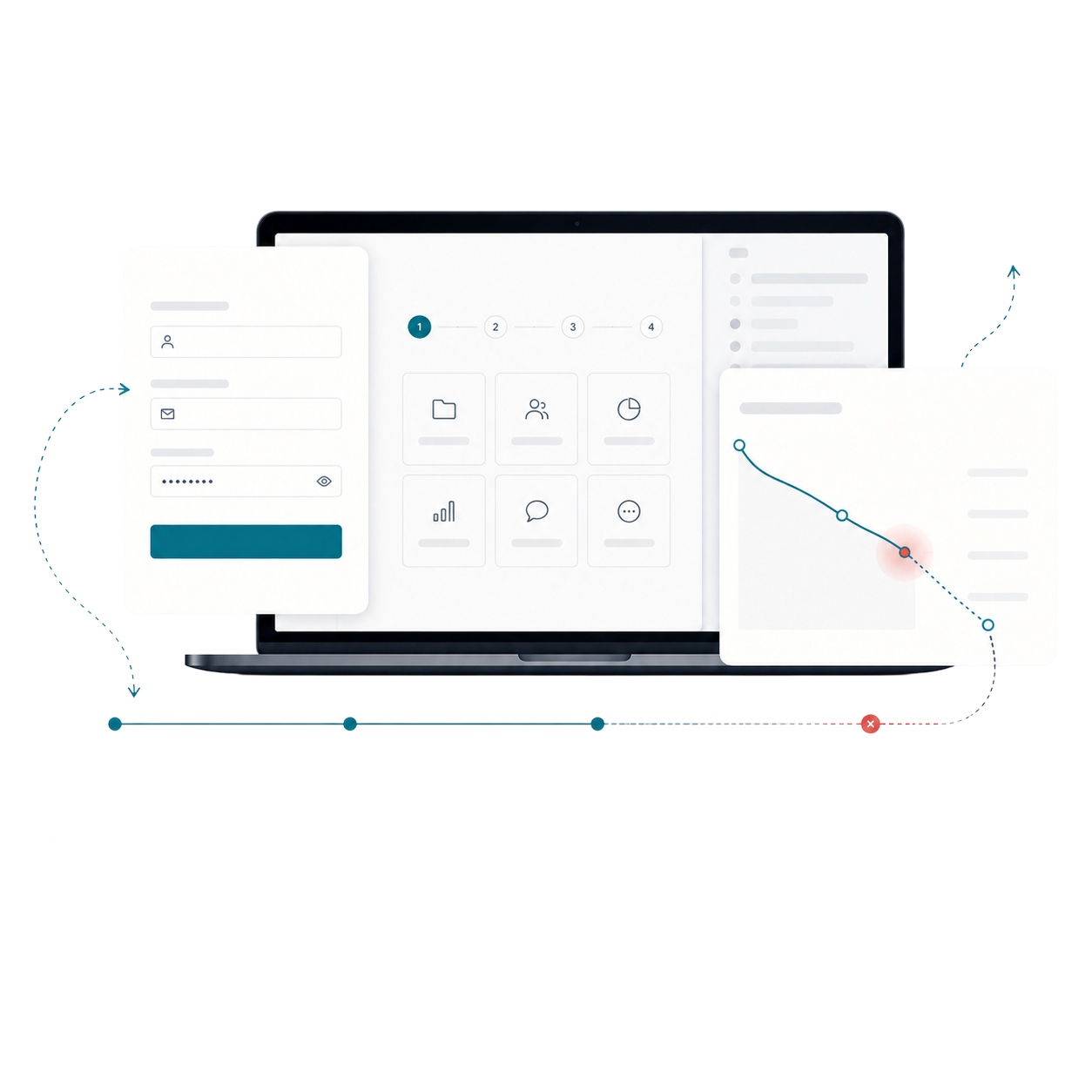
START WITH THE PROBLEM
Have a product, store or digital experience that needs clearer thinking?
I help SaaS founders, Shopify brands and agencies diagnose friction, design better journeys and deliver interfaces that can actually be built.


UX · PRODUCT · SHOPIFY · DEVELOPMENT
I solve usability problems before they become business problems — connecting UX, product thinking and build-ready delivery.

Available for selected remote projects


© 2026 Steve Roberts / ME&CO. All rights reserved.



MENU

Post:
Why Most UX Redesigns Fail
Many redesign projects begin with excitement and end with disappointment. Not because teams lack skill — but because they lack clarity.
The most common reasons redesigns fail:
1. They focus on appearance, not behaviour
Changing visuals without understanding user decision-making rarely improves outcomes.
2. They skip research
Assumptions replace evidence. Design becomes opinion-driven.
3. They solve internal problems, not user problems
What stakeholders want is not always what users need.
4. They measure success incorrectly
If success is “it looks better,” impact will be unclear.
Effective redesigns start with understanding:
- Where users struggle
- Why they hesitate
- What they expect
- What prevents completion
Redesign is not reinvention. It is optimisation based on evidence.
The best redesign is not the boldest.
It is the most informed.
Next Post


UX Design & Reserach
Crafting User-Focused Digital Experiences For Advanced Customer Engagement.
UX Design Consultant & Strategist Advisor @ Self-Employed (Me&Co) | UI Designer, UX Product Researcher, Brand Designer, Social Media Manager.As a Consultant, Mentor, Researcher, UX/UI Designer, and Developer, I am passionate about crafting intuitive and user-centric digital experiences. With a strong foundation in UX strategy, UI design, and development, I bridge the gap between research, design, and technology to create innovative and scalable solutions. My expertise extends across multiple industries, delivering impactful products through a mix of design thinking, user research, and technical execution.
With years of experience, I have successfully led and contributed to numerous projects, enhancing user engagement and optimizing business performance. My ability to integrate UX principles with cutting-edge technology ensures that I develop solutions that are not only aesthetically pleasing but also highly functional and user-friendly.
Let’s make something happen
Send me an Enquiry, Book a Discovery Call
Contact me, on the following links.
Let’s make something happen
Send me an Enquiry, Book a Discovery Call
Contact me, on the following links.
START WITH THE PROBLEM
Have a product, store or digital experience that needs clearer thinking?
I help SaaS founders, Shopify brands and agencies diagnose friction, design better journeys and deliver interfaces that can actually be built.


UX · PRODUCT · SHOPIFY · DEVELOPMENT
I solve usability problems before they become business problems — connecting UX, product thinking and build-ready delivery.
Available for selected remote projects


© 2026 Steve Roberts / ME&CO. All rights reserved.

HOME
MENU


Post:
Why Most UX Redesigns Fail
Many redesign projects begin with excitement and end with disappointment. Not because teams lack skill — but because they lack clarity.
The most common reasons redesigns fail:
1. They focus on appearance, not behaviour
Changing visuals without understanding user decision-making rarely improves outcomes.
2. They skip research
Assumptions replace evidence. Design becomes opinion-driven.
3. They solve internal problems, not user problems
What stakeholders want is not always what users need.
4. They measure success incorrectly
If success is “it looks better,” impact will be unclear.
Effective redesigns start with understanding:
- Where users struggle
- Why they hesitate
- What they expect
- What prevents completion
Redesign is not reinvention. It is optimisation based on evidence.
The best redesign is not the boldest.
It is the most informed.
Next Post

UX Design & Research
Crafting User-Focused Digital Experiences For Advanced Customer Engagement.
UX Design Consultant & Strategist Advisor @ Self-Employed (Me&Co) | UI Designer, UX Product Researcher, Brand Designer, Social Media Manager.As a Consultant, Mentor, Researcher, UX/UI Designer, and Developer, I am passionate about crafting intuitive and user-centric digital experiences. With a strong foundation in UX strategy, UI design, and development, I bridge the gap between research, design, and technology to create innovative and scalable solutions. My expertise extends across multiple industries, delivering impactful products through a mix of design thinking, user research, and technical execution.
Agile and human centred design










START WITH THE PROBLEM
Have a product, store or digital experience that needs clearer thinking?
I help SaaS founders, Shopify brands and agencies diagnose friction, design better journeys and deliver interfaces that can actually be built.


UX · PRODUCT · SHOPIFY · DEVELOPMENT
I solve usability problems before they become business problems — connecting UX, product thinking and build-ready delivery.
Available for selected remote projects

© 2026 Steve Roberts / ME&CO. All rights reserved.

ABOUT
UX CONSULTANT
UX RESEARCH
UI & GRAPHICS
SOFTWARE
PORTFOLIO
RESOURCES
BOOKS
BLOG
